Section
Safety Toe Boots: Steel, Composite, Alloy and Carbon Toes Explained
By The Boot Yard editors · Updated 2026-11-08 · How we research
We may earn a commission when you buy through links on this page.
Short answer
Safety toe boots are work boots whose toe cap passed the ASTM F2413 impact and compression tests. Steel is one option; composite, alloy, aluminum and carbon caps pass the same minimum. Pick the material for weight, cold and metal detectors, then check the label for the extra codes your job needs: EH, Mt, PR or SD.
Safety toe boots are defined by one line on a label, such as "ASTM F2413-24, I/C, EH SR" for Irish Setter's Ashby. That line, printed inside the tongue, says the toe cap passed impact (I) and compression (C) under the 2024 edition of the US performance standard, that the boot is rated for electrical hazard (EH), and that the maker claims slip resistance (SR). The Ashby's cap is aluminum, not steel.
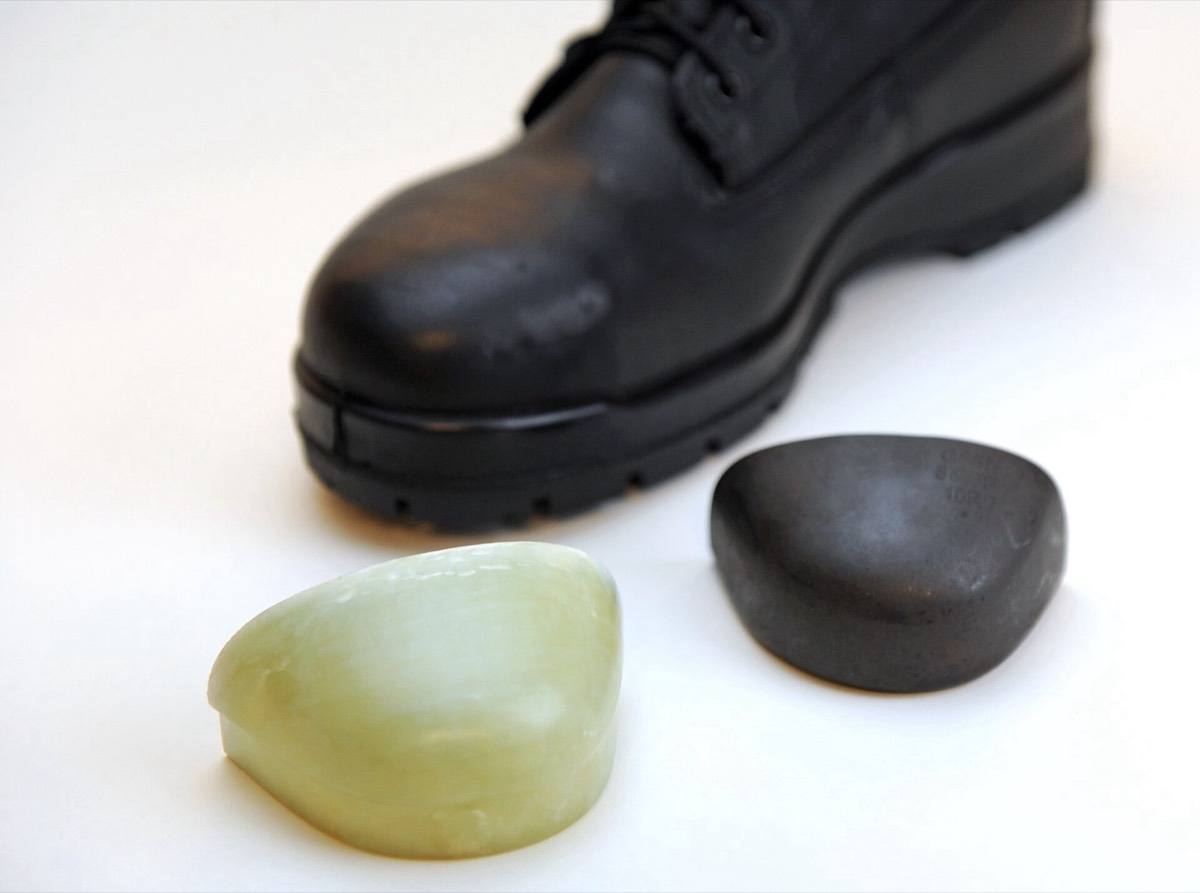
That is the whole definition. A safety toe is a protective cap over the toes that meets ASTM F2413, whatever it is made of. "Steel toe" is the oldest and most familiar version, which is why people use the words interchangeably, but our catalogue of 60 current models includes composite, alloy, aluminum, carbon and other non-metallic caps, and every one of them had to clear the same toe tests.
This page lays out the materials, decodes each code you will meet on a label, and shows how labels changed between editions. Paste any rating line into the decoder below to read it in plain English.
One current example per toe material
1. Steel: classic 8-inch wedge
Wolverine Loader 8" Steel-Toe Wedge Boot
Wolverine rates the steel toe "ASTM F2413 M/I/C EH" on a Goodyear welt boot with a polyurethane wedge sole and a steel shank. Unlined and not waterproof, it is the traditional steel-toe build in its plainest form.
Buy it if: Flat, dry floors and anyone who wants a welted steel-toe boot in M or EW. Skip it if: You work wet or cold: there is no membrane and no lining.
- Safety toe
- Steel toe
- Rating line
- ASTM F2413 M/I/C EH
- Height
- 8 in
- Construction
- Goodyear welt
- Widths
- M, EW
Specs: Wolverine product page (2026-11-09)
2. Composite: rated to the 2024 edition
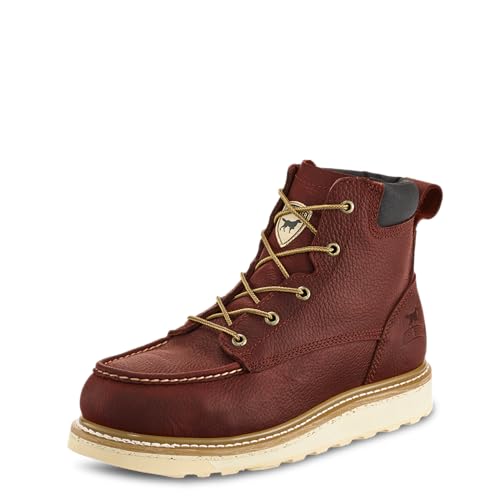
BRUNT The Sullivan Waterproof (Comp Toe)
Brunt prints "Meets ASTM F2413-24 M I/75 C/75 EH standards" for a non-metallic nano-composite toe, with a waterproof membrane and an oil- and slip-resistant outsole that Brunt says meets ASTM F2913-19 slip testing. One boot ships as D and converts to EE with Brunt's removable insert.
Buy it if: Buyers who want no metal cap and a current-edition rating line around $160. Skip it if: You need a tested met guard or puncture plate; neither is listed.
- Safety toe
- Composite toe
- Rating line
- Meets ASTM F2413-24 M I/75 C/75 EH standards
- Height
- 6 in
- Waterproof
- Waterproof membrane
- Construction
- cement
- Widths
- D, EE
- Maker also claims
- heat-resistant outsole
Specs: BRUNT product page (style BRF10011) (2026-11-09)
3. Carbon: welted and waterproof
KEEN Utility Cincinnati 6" Waterproof Boot (Carbon Toe)
KEEN states "Meets ASTM F2412-18 and F2413-18 M I/75 C/75 EH standards" for asymmetrical non-metallic carbon toes, which KEEN says are 15% lighter than steel. Full 360° Goodyear welt, KEEN.DRY membrane, Regular or Wide.
Buy it if: Cold or wet work where you want a metal-free cap in a welted boot. Skip it if: You expected a true 6-inch shaft: KEEN publishes 4.92 in.
- Safety toe
- Carbon-fiber toe
- Rating line
- Meets ASTM F2412-18 and F2413-18 M I/75 C/75 EH standards
- Height
- 4.92 in
- Waterproof
- KEEN.DRY waterproof, breathable membrane
- Construction
- Goodyear welt
- Widths
- Regular, Wide
- Maker also claims
- heat-resistant outsole
Specs: KEEN product page (2026-11-09)
4. Alloy: athletic safety shoe
Reebok Work Sublite Cushion Work - RB4041
Reebok Work lists "ASTM F2413, Alloy Toe, XTR Brand Alloy Toe Cap, Slip Resistant, Electrical Hazard Protection" with no class line, on a microfiber-and-mesh shoe with an EVA midsole. It comes in M, W and 4E, and Reebok describes an extra-wide toe.
Buy it if: Warehouse and shop floors where a sneaker-style shoe is allowed and width is the problem. Skip it if: Your employer needs to see I and C printed: Reebok's page states only "ASTM F2413".
- Safety toe
- Alloy toe
- Rating line
- ASTM F2413
- Widths
- M, W, 4E
- Maker also claims
- slip-resistant outsole
Specs: Reebok Work product page (2026-11-09)
5. Aluminum: the label at the top of this page
Irish Setter Ashby 6-inch Leather Safety Toe Boot
Irish Setter's line "ASTM F2413-24, I/C, EH SR" sits on an aluminum toe, a Goodyear welt and Trout Brook leather from S.B. Foot Tanning, with a heat-resistant outsole Irish Setter says resists melting up to 475°F. Sold in D and EE.
Buy it if: Anyone who wants a metal cap lighter than steel in a traditional leather boot. Skip it if: You need waterproofing; the maker page makes no waterproof claim.
- Safety toe
- Aluminum toe
- Rating line
- ASTM F2413-24, I/C, EH SR
- Height
- 6 in
- Construction
- Goodyear welt
- Widths
- D, EE
- Maker also claims
- heat-resistant outsole
Specs: Irish Setter product page (2026-11-09)


Product prices and availability are accurate as of 2026-11-13 and are subject to change. Amazon prices are for the size and colour linked and vary by size. Specs are the makers' published figures; we don't wear-test boots.
20 boots match.
PUMA Safety ICONIC LOW Safety shoes ASTM EH SR
Composite toe · shoe · men's
ICEHSR
heat-resistant outsole (maker's claim)
Specs: PUMA Safety product page (Safety class EH; spec list) (2026-11-09)
HEYDUDE Wendy Work CT
Composite toe · shoe · women's
ICEH
slip-resistant outsole (maker's claim)
Specs: HEYDUDE product page (style 44289) (2026-11-09)
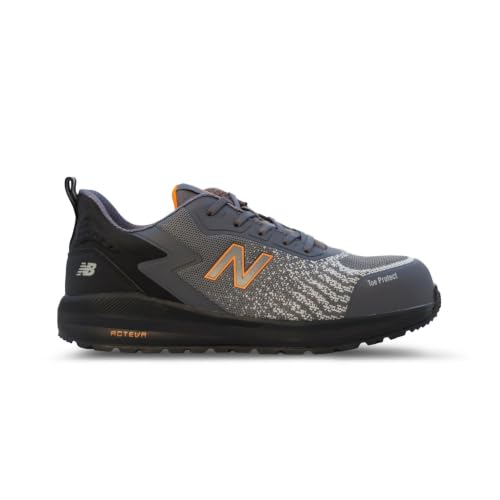
New Balance Speedware Comp Toe
Composite toe · shoe · men's
ICEHSRPR
Specs: Amazon listing (brand store) — New Balance Speedware, style MIDSPWRGR (2026-11-09)
New Balance Fresh Foam Cremorne Mid CT
Composite toe · shoe · men's
ICEHSR
heat-resistant outsole (maker's claim)
Specs: Amazon listing (brand store) — New Balance Fresh Foam Cremorne Mid CT, style MUFCMCEHCO (2026-11-09)
Xena Workwear Astra Athletic
Composite toe · shoe · women's
ICSDPRSR
Specs: Xena Workwear product page (2026-11-09)
HEYDUDE Bradley II Work CT Leather
Composite toe · boot · men's
ICEH
slip-resistant outsole (maker's claim)
Specs: HEYDUDE product page (style 46122) (2026-11-09)
Reebok Work Rapid Response RB® - RB8874
Composite toe · boot · 8 in · men's
ICEH
Specs: Reebok Work product page (2026-11-09)
KEEN Utility Evanston 6" Waterproof Boot (Carbon Toe)
Carbon fiber toe · boot · 4.33 in · men's · waterproof
ICEHSR
heat-resistant outsole (maker's claim)
Specs: KEEN product page (2026-11-09)
BRUNT The Sullivan Waterproof (Comp Toe)
Composite toe · boot · 6 in · men's · waterproof
ICEHSR
heat-resistant outsole (maker's claim)
Specs: BRUNT product page (style BRF10011) (2026-11-09)
New Balance Calibre Comp Toe
Composite toe · boot · men's
ICEHSRPR
Specs: Amazon listing (brand store) — New Balance Calibre, style MIDCLBR (2026-11-09)
Timberland PRO Boondock 6" Composite Toe Waterproof
Composite toe · boot · 6 in · men's · waterproof
ICEH
slip-resistant outsole (maker's claim)
Specs: Amazon listing (brand store) (2026-11-09)
KEEN Utility Evanston 6" Waterproof Boot INT MET (Carbon Toe)
Carbon fiber toe · boot · 4.33 in · men's · waterproof
ICMtEHSR
heat-resistant outsole (maker's claim)
Specs: KEEN product page (2026-11-09)
Timberland PRO TiTAN EV 6" Composite Toe Waterproof
Composite toe · boot · 6 in · men's · waterproof
IC
slip-resistant outsole (maker's claim)
Specs: Amazon listing (brand store) (2026-11-09)
Wolverine Overpass CarbonMAX® 6" Boot
Composite toe · boot · 6 in · men's · waterproof
ICEH
Specs: Wolverine product page (2026-11-09)
Wolverine Raider DuraShocks® Waterproof 6" Met-Guard Work Boot
Composite toe · boot · 6 in · men's · waterproof
ICMtEH
Specs: Wolverine product page (2026-11-09)
KEEN Utility Cincinnati 6" Waterproof Boot (Carbon Toe)
Carbon fiber toe · boot · 4.92 in · men's · waterproof
ICEHSR
heat-resistant outsole (maker's claim)
Specs: KEEN product page (2026-11-09)
Irish Setter Wingshooter ST 6-inch Waterproof Leather Safety Toe Boot
Non-metallic toe · boot · 6 in · men's · waterproof
ICEHSR
heat-resistant outsole (maker's claim)
Specs: Irish Setter product page (2026-11-09)
Carolina 28 Series: 6" Waterproof Work Boot (Comp Toe)
Composite toe · boot · 6 in · men's · waterproof
ICEH
Specs: Carolina Shoe product page (2026-11-09)
Ariat WorkHog Waterproof Composite Toe Work Boot
Composite toe · western · 11 in · men's · waterproof
ICEHSR
heat-resistant outsole (maker's claim)
Specs: Ariat product page (2026-11-09)
Carolina Linesman: 10" Waterproof Work Boot (Comp Toe)
Composite toe · boot · 10 in · men's · waterproof
ICEH
slip-resistant outsole (maker's claim)
Specs: Carolina Shoe product page (2026-11-09)




Specs are makers' published figures, linked on every card. Prices as of 2026-11-13; product prices and availability are subject to change. As an Amazon Associate we earn from qualifying purchases.
Toe materials in our catalogue, and the codes they carry
Steel dominates the market, but every non-steel material shows up with the same extra codes. The table counts the 60 models in our catalogue by toe material and shows how many list each extra protection on the maker's page. It is a picture of what is on sale, not a ranking.
| Toe material | Models | EH | Mt | PR | Waterproof | Women's |
|---|---|---|---|---|---|---|
| Steel | 37 | 33 | 1 | 1 | 18 | 9 |
| Composite | 16 | 14 | 1 | 3 | 8 | 2 |
| Carbon (KEEN) | 3 | 3 | 1 | 0 | 3 | 0 |
| Alloy | 2 | 2 | 0 | 0 | 0 | 0 |
| Aluminum | 1 | 1 | 0 | 0 | 0 | 0 |
| Other non-metallic (Irish Setter Nanotoe) | 1 | 1 | 0 | 0 | 1 | 0 |
What each code on the label means
ASTM F2413 is the performance specification; ASTM F2412 is the companion standard that describes how the tests are run. Only the toe tests (I and C) are compulsory for a safety toe. Everything else on the line is an optional extra the maker chose to test for. The test values below come from secondary sources that quote the paywalled standard, each named.
| Code | Name | What is tested |
|---|---|---|
| I | Impact-resistant toe | 75 ft-lbf (101.7 J) of impact energy from a 50 lb weight; at least 0.500 in clearance left inside (0.468 in women's) |
| C | Compression-resistant toe | 2,500 lbf (11,121 N) of compression; same minimum clearance |
| Mt | Metatarsal protection | 75 ft-lb impact 3.5 in back from the toe; 1.0 in clearance men's, 0.937 in women's |
| EH | Electrical hazard | 18,000 V at 60 Hz for 1 minute, leakage no more than 1.0 mA, dry conditions |
| SD10 / SD35 / SD100 | Static dissipative | Resistance kept between 1 MΩ and 10, 35 or 100 MΩ |
| Cd | Conductive | Resistance between 0 and 500,000 ohms |
| PR | Puncture resistant | Resists 1,200 N (270 lbf); no cracking after 1.5 million flexes |
| SR / SRO | Slip resistant (ASTM F3445) | Coefficient of friction at least 0.40 dry and wet; SRO adds at least 0.33 on oily-wet tile |
Is a safety toe the same as a steel toe?
Every steel toe is a safety toe, but not every safety toe is steel. The standard does not care what the cap is made of, only what it survives. Thorogood, a boot maker that sells both, states that composite toes meet the same certification as steel.
What changes with material is everything around the test. Steel caps are thin and strong, so a steel-toe boot can have a slimmer toe profile. Composite and carbon caps carry no metal, so they do not conduct cold the way metal does and they suit buyers who pass through metal detectors (with the caveat that eyelets, shanks or puncture plates may still be metal). Alloy and aluminum caps sit between: still metal, but sold as lighter than steel, and they appear mostly on athletic-style safety shoes in our catalogue.
One myth is worth killing early. A non-metal toe does not make a boot electrically rated. EH is a separate test on the whole boot and has to appear on the label. The reverse holds too: 33 of the 37 steel-toe models in our catalogue are EH-rated.
The picks above show the spread: one boot per material, each with its maker's rating line. Notice that the line format does not change with the material. A steel Wolverine and a carbon KEEN both print I and C; what differs is the edition, the extras and how the maker writes them.
Old labels vs new labels
The way the line is written depends on the edition the boot was certified to. The 2005 and 2011 editions had impact and compression classes (75 and 50), so labels printed "I/75 C/75". From F2413-18 the standard has one level and the line reads like "M/I/C", where M or F is the gender the toe was tested for. Some makers still print the /75 notation on boots certified to -18. All of the examples below are copied from current makers' pages.
- OSHA's rule (1910.136) still names the 2005 editions; newer editions are accepted as "at least as effective".
- Since F2413-18, makers need a third-party lab test report and a Certificate of Conformance (OH&S, Hyllengren).
- The 2024 edition added SR and SRO slip codes to the label (SATRA), but slip resistance stays optional unless claimed.
| Edition on line | Example as published | Boot |
|---|---|---|
| F2413-11 | ASTM F2413-11 M I/75 C/75 EH | Muck Arctic Sport Tall Steel |
| F2413-18 (old notation) | ASTM F2413-18 M I/75 C/75 EH | Wolverine Floorhand Waterproof 6" |
| F2413 (no year) | ASTM F2413 M/I/C EH | Wolverine Overpass 6" composite |
| F2413 women's | ASTM F2413 F/I/C EH | Wolverine Women's Floorhand 6" |
| F2413-24 | ASTM F2413-24, I/C, EH SR | Irish Setter Ashby 6" aluminum |
| F2413-18 + met + slip | Meets ASTM F3445-21 and F2413-18 M I/75 C/75 MT/75 EH standards | KEEN Utility Evanston 6" Int Met (an -18 line with a tested slip rating) |
Pick the toe for the job, then the codes
Start with the hazards your employer has identified, because those set the codes. Then pick a toe material for comfort and site rules. This order stops people buying a composite boot expecting electrical protection, or a steel boot for a site with walk-through metal detectors.
If nobody has told you which hazards apply, ask for the hazard assessment. Under 1910.132 the employer has to assess the workplace and select PPE for the hazards found, so the answer should already exist on paper before you spend money.
- Dropped tools, parts or packages: I and C. Every safety toe has them.
- Carts, pallet jacks, rolls or pipe that can roll over feet: C is the key code (OSHA Appendix B).
- Nails, screws, wire or scrap underfoot: add PR. Only 4 of our 60 models list it, so filter for it.
- Heavy objects that can strike the top of the foot: add Mt, internal or external.
- Live wires or energized circuits: add EH, and keep the boots dry and in good repair.
- Static-sensitive electronics: SD at the class your site specifies. Explosives or volatile chemicals: Cd.
- Then choose the cap: steel for the slimmest toe, composite or carbon for no metal and less cold, alloy or aluminum for a lighter metal cap.
Reading a Canadian label
Boots sold in both countries often carry CSA Z195 marks alongside the ASTM line. Canada uses coloured patches instead of letter codes. A boot can carry both, but one does not stand in for the other on a US site unless your employer accepts it.
| Mark | Meaning |
|---|---|
| Green triangle | Puncture protection plus Grade 1 toe cap; heavy industrial work, especially construction where nails are present |
| Yellow triangle | Puncture protection plus Grade 2 toe cap |
| Blue rectangle | Grade 1 toe cap, no puncture plate |
| Grey rectangle | Grade 2 toe cap, no puncture plate |
| White rectangle, orange omega | Electric-shock protective |
| Yellow rectangle, "SD" | Static dissipative |
| Red rectangle, "C" | Conductive |
| Dark grey rectangle, "M" | Metatarsal protection (toe protection required) |
| White label, green fir tree | Chainsaw protection |
Where the cap sits, and what can void the rating
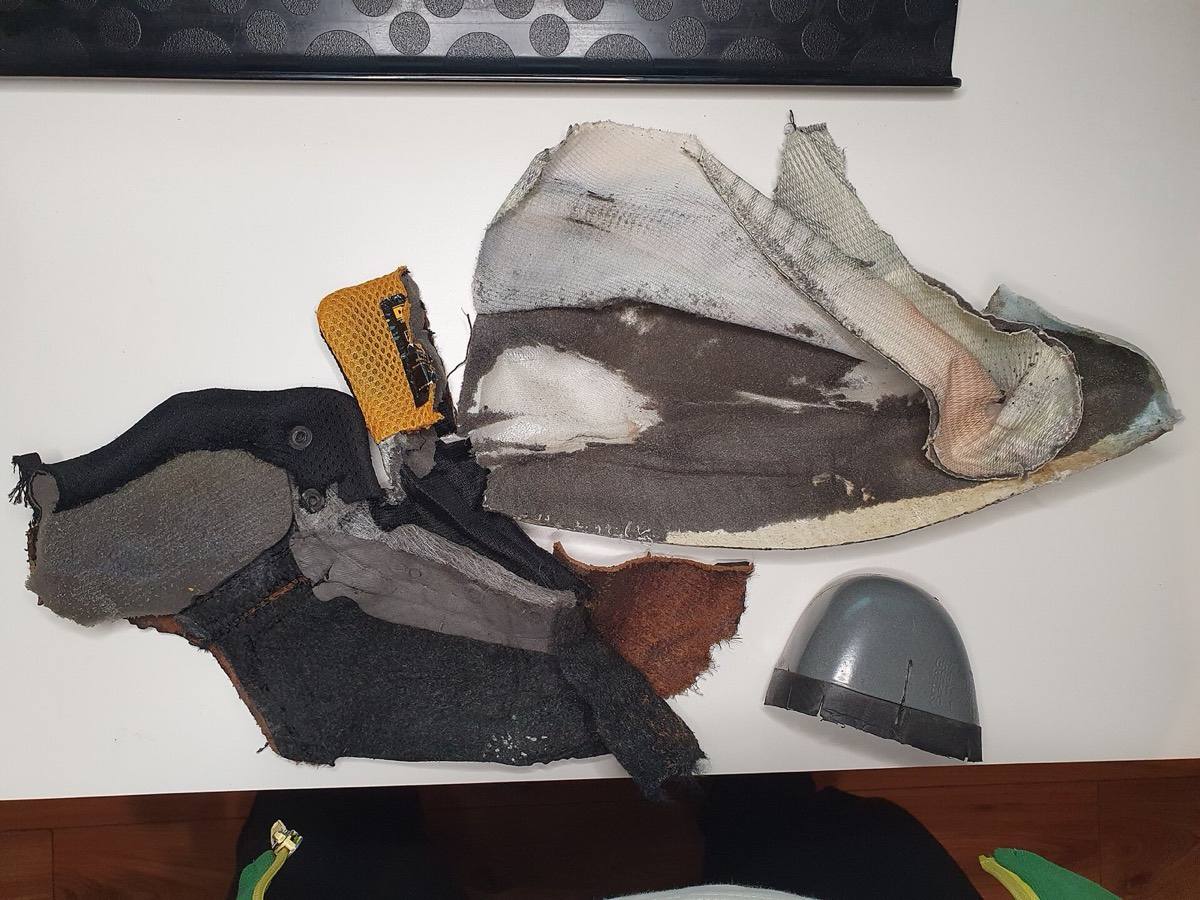
The cap is built into the boot between the lining and the upper, so you never see it on a finished pair. That is why the label is the only practical proof. It also explains two rules buyers rarely hear about.
First, the boot is certified as a whole. ASTM F2412-24 lists changes that force a maker to retest, including a new toe-cap material or supplier, a different factory, a change of more than 25% in upper or insole thickness, and a new last shape. Second, ASTM F2413-24's scope warns that after-market footbeds or inserts, or resoling, could make the ASTM marking invalid. Ask the maker before you swap insoles or send a rated boot to be resoled.
And replace a pair after a heavy hit. CCOHS advises replacing safety footwear after a puncture or impact event because damage may not be visible.
Going deeper on safety toe boots
The pages in this section each take one question further. The ASTM F2413-18 page walks through a full rating line field by field. The OSHA requirements page quotes 1910.136 and explains when your job needs safety toe boots at all. Composite toe vs steel toe compares the two caps head to head. The size chart page lines up the makers' own charts so you can convert between brands and between men's and women's sizes.
Later pages cover breaking in a new pair, when to replace one, and whether your employer has to pay. The short version of that last one: OSHA does not require employers to pay for non-specialty safety toe boots that you may wear off the job (1910.132(h)(2)), but specialty footwear can be different. If you already know what you need and want models, the best steel toe boots hub has eight cross-brand picks.
Every page in this section
- ASTM F2413-18 Decoded
ASTM F2413-18 explained line by line: what I, C, Mt, EH, SD and PR mean, the test values behind each, what changed in F2413-24, and if an -18 boot meets OSHA.
- Composite Toe vs Steel Toe
Composite toe vs steel toe, checked against ASTM F2413: both pass the same 75 ft-lbf impact and 2,500 lbf tests. Where they differ: metal, weight claims, price.
- OSHA Steel Toe Requirements
OSHA steel toe requirements quoted from 1910.136 and 1926.96: when foot protection is required, which standards count, and why composite toes qualify too.
- Work Boot Size Chart
Work boot size chart built from eight makers' own published charts: measure your foot once, see the US size each brand lists for it, and find width letters.
Questions people ask
- What's the difference between a safety toe and a steel toe boot?
- A safety toe is any toe cap that passes ASTM F2413's impact and compression tests. Steel is one material; composite, alloy, aluminum and carbon caps meet the same minimum. Look for the I and C on the label rather than the word steel.
- Is an alloy toe the same as a steel toe?
- Both are metal caps that meet the same ASTM toe tests. Makers market alloy caps as lighter than steel; Timberland PRO calls its alloy cap "lightweight". In our catalogue they appear mostly on athletic-style safety shoes, such as the Reebok Work Sublite Cushion and Timberland PRO Powertrain Sport.
- Do composite toe boots set off metal detectors?
- A composite cap has no metal, but we found no authoritative source that promises a composite boot will not alarm, because eyelets, shanks or puncture plates may be metal. Justin Boots notes that steel toes can set off airport detectors and TSA may screen further.
- Does OSHA approve safety toe boots?
- OSHA does not approve or certify any footwear. Its rule, 1910.136, requires protective footwear that meets the ASTM F2413-2005 standard it references, or footwear the employer shows is at least as effective. Look for the ASTM line on the label.
- Can I put my own insoles in safety toe boots?
- Check with the maker first. ASTM F2413-24's scope says after-market footbeds or inserts could make the ASTM marking invalid. Many makers sell or approve replacement footbeds for their rated boots.
Sources & further reading
- ASTM F2413-24 abstract
- ASTM F2412-24 abstract
- OSHA 29 CFR 1910.136 Foot protection
- OSHA 29 CFR 1910.132 (h) payment for PPE
- OSHA 1910 Subpart I, Appendix B
- OSHA interpretation letter, 2013-12-09
- Thorogood: A Guide to ASTM Ratings and OSHA Work Boots
- Thorogood: ASTM Testing for Boots
- Univ. of Washington: ASTM F2413-11 Performance Requirements (PDF)
- OH&S: Take a Walk Through the New Footwear Safety Standards (Hyllengren, 2019)
- SATRA: Updates to US slip resistance standards (2024)
- CCOHS OSH Answers: Safety Footwear
- Justin Boots: Steel toe boots and airport security
- Irish Setter Ashby (aluminum toe)
- Quora: Is an alloy toe the same as a steel toe? (user question)
Read next
- ASTM F2413-18 Decoded
ASTM F2413-18 explained line by line: what I, C, Mt, EH, SD and PR mean, the test values behind each, what changed in F2413-24, and if an -18 boot meets OSHA.
- Composite Toe vs Steel Toe
Composite toe vs steel toe, checked against ASTM F2413: both pass the same 75 ft-lbf impact and 2,500 lbf tests. Where they differ: metal, weight claims, price.
- OSHA Steel Toe Requirements
OSHA steel toe requirements quoted from 1910.136 and 1926.96: when foot protection is required, which standards count, and why composite toes qualify too.
- Work Boot Size Chart
Work boot size chart built from eight makers' own published charts: measure your foot once, see the US size each brand lists for it, and find width letters.
- Best Steel Toe Boots
Best steel toe boots for 2026: 8 picks across budget, waterproof, metal-free, EH, met guard, women's, slip-on and western, each with its published ASTM line.
- Met Guard Boots
Met guard boots explained: what the ASTM Mt test measures, internal vs external guards, when OSHA expects one, who pays for built-in guards, and three picks.
Back to the The Boot Yard home page.

The Boot Yard editors · Editorial team
The Boot Yard's catalogue and guides are compiled by the site's editorial team from makers' published product pages, ASTM F2413 rating lines and OSHA's foot-protection rules. We do not wear-test boots, and we never claim to: every spec on the site links to the page it came from.
About this site · How pages are checked · Last updated November 8, 2026
As an Amazon Associate, The Boot Yard earns from qualifying purchases. It costs you nothing extra and never decides which boots we list.
The Boot Yard is an independent site. It is not affiliated with ASTM International, OSHA or any boot brand. Brand names and trademarks belong to their owners. Our guides explain published standards; your employer's safety program and the boot's own label decide what you must wear.