Guide
Electrician Boots: What EH Really Means, and 6 Rated Picks
By The Boot Yard editors · Updated 2026-11-08 · How we research
We may earn a commission when you buy through links on this page.
Short answer
Most electricians need a safety-toe boot whose label carries EH (electrical hazard). EH means the whole boot passed an 18,000-volt, one-minute test on dry footwear with no more than 1.0 mA of leakage. It is secondary protection only, and wet or worn boots lose some of it, so it never replaces de-energizing and testing a circuit. The toe can be steel, composite or carbon fiber; the EH line on the label is what counts, not the cap material.
Electrician boots come down to one code on the label: EH. ASTM F2413 defines it as footwear that withstands 18,000 volts at 60 Hz for one minute, under dry conditions, with no more than 1.0 milliampere of leakage current. The test values come from Thorogood's guide, which quotes F2413-18. OSHA's own selection guide calls this kind of footwear 'a supplementary form of protection'. So EH is a backup for the moment you step on something live by accident. It is not a rating for working on energized circuits.
Most of what goes wrong with this purchase comes from three mix-ups. People buy a composite toe and assume it is EH. They confuse EH with static-dissipative (SD) or conductive (Cd) footwear, which do the opposite job. Or they treat 18,000 V as a safe working voltage. This page clears up all three, then compares six boots by the rating line each maker actually prints. Use the finder below with the electrician preset to filter the full catalogue.
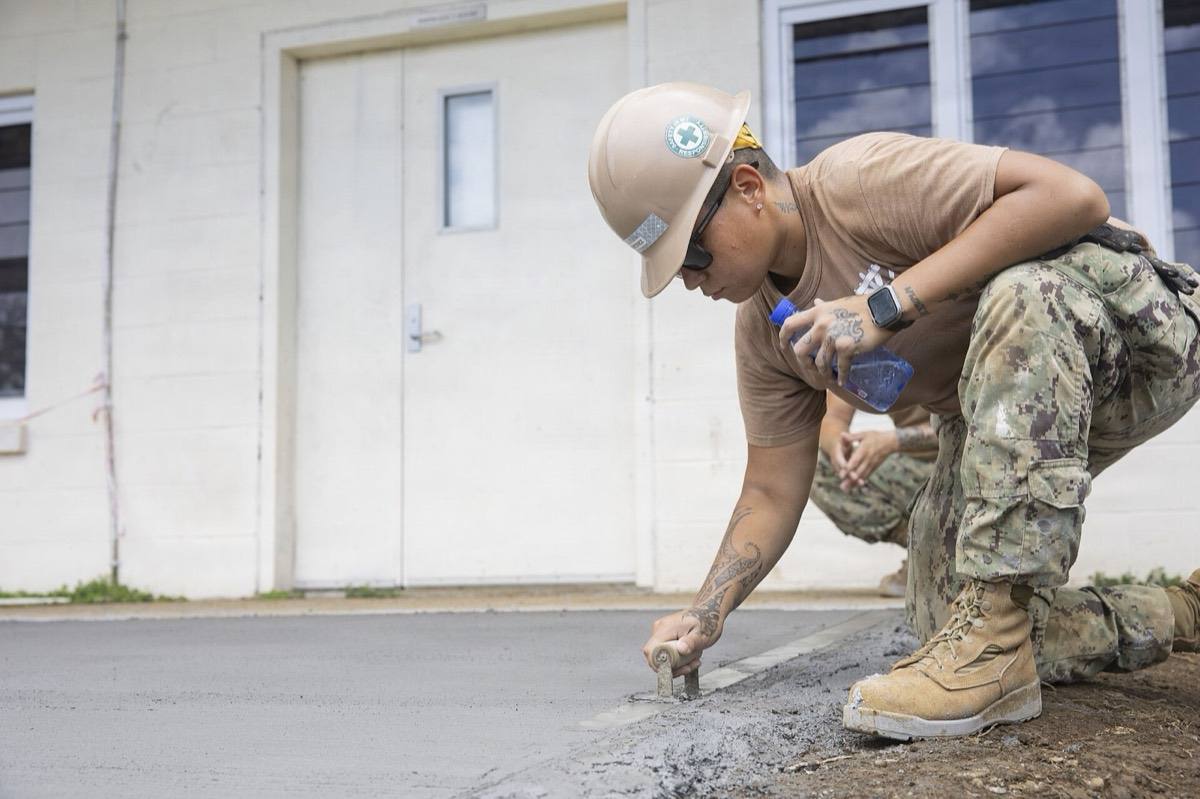
EH-rated picks for electricians
1. Best composite-toe EH boot for building trades
Wolverine Overpass CarbonMAX® 6" Boot
Wolverine prints the rating as 'ASTM F2413 M/I/C EH' on a CarbonMAX composite toe, with a waterproof leather upper and ContourWelt construction. It comes in medium and extra-wide. The maker does not publish a shaft height beyond the 6-inch name.
Buy it if: Commercial and residential electricians who want a light, non-metal cap and a single clear EH line. Skip it if: You need a defined heel and a tall shaft for climbing; look at the Carolina Linesman instead.
- Safety toe
- Composite toe
- Rating line
- ASTM F2413 M/I/C EH
- Height
- 6 in
- Waterproof
- Premium waterproof leather with abrasion resistant toe
- Construction
- ContourWelt
- Widths
- M, EW
Specs: Wolverine product page (2026-11-09)
2. Best for linemen and climbing
Carolina Linesman: 10" Waterproof Work Boot (Comp Toe)
Carolina lists this 10-inch composite-toe boot as 'Electrical Hazard Rated', cites ASTM F2413-18 for its toe, and builds it around a 'Heavy Duty Steel Right and Left Linesman Shank' with a Vibram outsole. Carolina publishes no single rating line, so read the label on the pair you receive.
Buy it if: Line and utility workers who stand on pegs, rungs or climbers and want shank support plus a tall waterproof shaft. Skip it if: You work indoors all day; a 10-inch welted boot is more than a panel job needs.
- Safety toe
- Composite toe
- Height
- 10 in
- Waterproof
- Waterproof SCUBALINER™
- Construction
- welt
- Widths
- D, 2E
- Maker also claims
- slip-resistant outsole
Specs: Carolina Shoe product page (2026-11-09)
3. Best carbon-toe EH boot with a resoleable welt
KEEN Utility Cincinnati 6" Waterproof Boot (Carbon Toe)
KEEN states it 'Meets ASTM F2412-18 and F2413-18 M I/75 C/75 EH standards' with non-metallic carbon toes and a full 360-degree Goodyear welt. KEEN lists the shaft at 4.92 in even though the model is called 6-inch, and the outsole is rated by KEEN as heat resistant to 572°F/300°C.
Buy it if: Electricians who want a wide KEEN toe shape, a waterproof membrane and a boot that can be rebuilt. Skip it if: You need ankle coverage above 5 inches.
- Safety toe
- Carbon-fiber toe
- Rating line
- Meets ASTM F2412-18 and F2413-18 M I/75 C/75 EH standards
- Height
- 4.92 in
- Waterproof
- KEEN.DRY waterproof, breathable membrane
- Construction
- Goodyear welt
- Widths
- Regular, Wide
- Maker also claims
- heat-resistant outsole
Specs: KEEN product page (2026-11-09)
4. Best metal-light option
Irish Setter Wingshooter ST 6-inch Waterproof Leather Safety Toe Boot
Irish Setter rates it 'ASTM F2413-24, I/C, EH SR' with a non-metallic Nanotoe safety toe, and its spec table lists the shank as 'None'. It is one of the few picks on the current F2413-24 edition. UltraDry waterproofing; D and EE widths.
Buy it if: Electricians who go through metal detectors on site or want as little metal underfoot as the maker lists. Skip it if: You want a shank for ladder work; this boot has none listed.
- Safety toe
- Non-metallic toe
- Rating line
- ASTM F2413-24, I/C, EH SR
- Height
- 6 in
- Waterproof
- UltraDry™ Waterproofing System
- Construction
- Goodyear leather welt
- Widths
- D, EE
- Maker also claims
- heat-resistant outsole
Specs: Irish Setter product page (2026-11-09)
5. Best budget EH boot (and proof steel can be EH)
Wolverine Floorhand Waterproof Steel-Toe 6" Work Boot
Wolverine prints 'ASTM F2413-18 M I/75 C/75 EH' on a steel-toe boot with a waterproof membrane, at a maker list price around $110. It shows that a steel toe and an EH rating go together fine. Cement construction, so it is not built to be resoled.
Buy it if: Apprentices who need a waterproof EH boot on a first-year budget. Skip it if: You want a resoleable welt or must avoid metal detectors.
- Safety toe
- Steel toe
- Rating line
- ASTM F2413-18 M I/75 C/75 EH
- Height
- 6 in
- Waterproof
- Breathable, waterproof membrane; waterproof full-grain leather upper
- Construction
- cement
- Widths
- M, EW
- Maker also claims
- slip-resistant outsole
Specs: Wolverine product page (2026-11-09)
6. Best women's EH boot
Xena Workwear Omega EH Safety Boot
Xena builds the Omega EH on a woman's last and lists 'Impact & Compression Resistant (I/75 C/75) Steel Toe' with 'Electrical Hazard Protection (EH Rated)' to ASTM F2413-24. It has a side zipper and is water-resistant, not waterproof. Regular and wide widths.
Buy it if: Women electricians who are tired of downsized men's lasts. Skip it if: You work in standing water; Xena says water-resistant, not waterproof.
- Safety toe
- Steel toe
- Rating line
- ASTM F2413-24 Certified; Impact & Compression Resistant (I/75 C/75) Steel Toe; Electrical Hazard Protection (EH Rated)
- Height
- 6 in
- Widths
- Regular, Wide
- Maker also claims
- slip-resistant outsole
Specs: Xena Workwear product page (2026-11-09)


Product prices and availability are accurate as of 2026-11-13 and are subject to change. Amazon prices are for the size and colour linked and vary by size. Specs are the makers' published figures; we don't wear-test boots.
Pick your job or the hazards on your site. We turn them into the ASTM F2413 codes a boot must carry, then list the boots in our catalogue whose published rating line includes every one. Your employer's hazard assessment (OSHA 29 CFR 1910.132(d)) has the final word.
A starting point drawn from the hazard examples in OSHA's Appendix B; your employer's hazard assessment decides. OSHA 1910 Subpart I, App. B
Hazards where you work
Your preferences
Codes your boots need
- IThe toe cap is struck by a 50 lb weight with a nominal 75 foot-pounds of energy and must keep a minimum interior clearance. 75 ft-lbf is an energy, not a weight. F2413-18 labels show it as 'I' on line 2 (e.g. 'M/I/C'); F2413-11 labels showed 'I/75'.
- CThe toe cap is squeezed with 2,500 lbf and must keep the same minimum clearance as the impact test. Older editions (F2413-05/-11) also had a lower class 50; OSHA's 2013 interpretation letter notes F2413-05 allowed a minimum of 50.
- EHSecondary protection if you accidentally step on a live wire or energized conductor, in DRY conditions. The 18,000 V figure is a lab proof test, not a safe working voltage; protection drops with wear and wetness.
42 boots in our catalogue match
Skechers Work: Rotund - Darragh ST
Steel toe · boot · 4 in · women's
ICEH
slip-resistant outsole (maker's claim)
Carries I · Carries C · Carries EH
Specs: Skechers product page (style 108055) (2026-11-09)
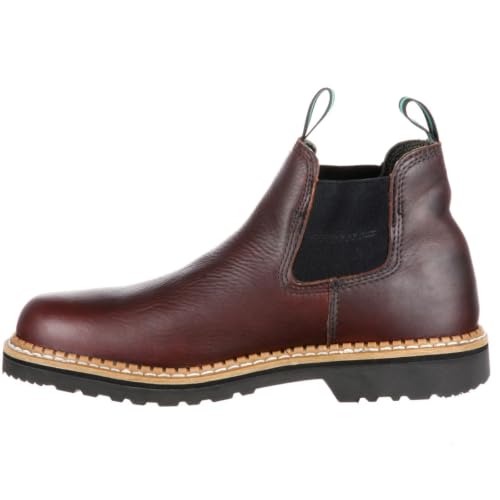
Georgia Boot Georgia Giant Waterproof Steel Toe Chelsea
Steel toe · chelsea · 5 in · men's · waterproof
ICEH
slip-resistant outsole (maker's claim)
Carries I · Carries C · Carries EH
Specs: Georgia Boot product page (2026-11-09)
CAT Footwear Striver Steel Toe Work Boot
Steel toe · boot · men's
ICEH
slip-resistant outsole (maker's claim)
Carries I · Carries C · Carries EH
Specs: Cat Footwear product page (2026-11-09)
CAT Footwear Echo Waterproof Steel Toe Work Boot
Steel toe · boot · 8 in · women's · waterproof
ICEH
slip-resistant outsole (maker's claim)
Carries I · Carries C · Carries EH
Specs: Cat Footwear product page (2026-11-09)
Georgia Boot Georgia Boot Steel Toe Waterproof Logger Boot
Steel toe · logger · 8 in · men's · waterproof
ICEH
Carries I · Carries C · Carries EH
Specs: Georgia Boot product page (2026-11-09)
Timberland PRO Keele Ridge Steel Toe Waterproof Hiker
Steel toe · boot · men's · waterproof
ICEH
slip-resistant outsole (maker's claim)
Carries I · Carries C · Carries EH
Specs: Amazon listing (brand store) (2026-11-09)
Wolverine Floorhand Waterproof Steel-Toe 6" Work Boot
Steel toe · boot · 6 in · men's · waterproof
ICEH
slip-resistant outsole (maker's claim)
Carries I · Carries C · Carries EH
Specs: Wolverine product page (2026-11-09)
Wolverine Rancher Level Chelsea Slip-On Steel-Toe Work Boot
Steel toe · chelsea · men's · waterproof
ICEHSR
Carries I · Carries C · Carries EH
Specs: Wolverine product page (2026-11-09)
Wolverine Women's Floorhand 6" Steel Toe Boot
Steel toe · boot · 6 in · women's · waterproof
ICEH
Carries I · Carries C · Carries EH
Specs: Wolverine product page (2026-11-09)
Muck Boot Company Chore Classic Men's Steel Toe Boot
Steel toe · rubber · 16 in · men's · waterproof
ICEHSR
Carries I · Carries C · Carries EH
Specs: Muck Boot Company product page (style CHS000A) (2026-11-09)
Timberland PRO Pit Boss 6" Steel Toe
Steel toe · boot · 6 in · men's
ICEH
slip-resistant outsole (maker's claim)
Carries I · Carries C · Carries EH
Specs: Amazon listing (brand store) (2026-11-09)
Rocky Blizzard Stalker Steel Toe Waterproof 1200G Insulated Work Boot
Steel toe · boot · 9 in · men's · waterproof · 1200 grams of 3M™ Thinsulate™ Ultra Insulation
ICEH
Carries I · Carries C · Carries EH
Specs: Rocky product page (style FQ0007465) (2026-11-09)



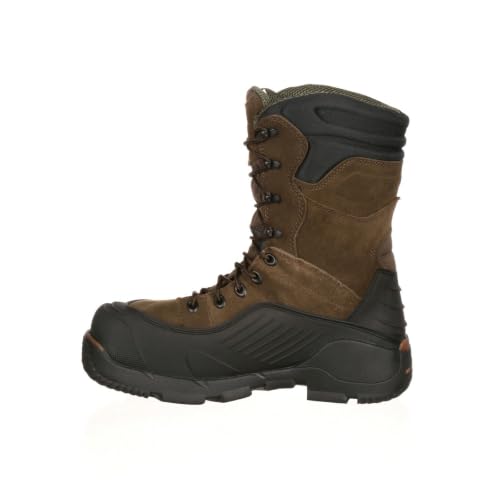
Showing the 12 lowest-priced. .
Specs are makers' published figures, linked on every card. Prices as of 2026-11-13; product prices and availability are subject to change. As an Amazon Associate we earn from qualifying purchases.
EH, SD and Cd: three electrical codes that do opposite jobs
All three codes deal with electricity, and that is about all they share. EH boots resist current flowing through the sole. Conductive boots are built to carry static charge into the ground. SD boots sit in a controlled band between the two. CCOHS, Canada's occupational safety centre, warns that SD and conductive footwear 'should not be used where contact with live electrical conductors can occur'.
That is why a boot is never sold as EH and Cd together: one insulates and the other conducts. A few makers sell the same model in EH and SD versions that differ only by colourway. Xena's Astra athletic shoe is one: its White Gold colour is SD and its Black Silver colour is EH, according to Xena's product page. If you order by colour without reading the label, you can end up with the wrong code.
| Code | What it does | Lab test value | Right for electricians? |
|---|---|---|---|
| EH (electrical hazard) | Limits current through the sole if you step on a live conductor | 18,000 V RMS, 60 Hz, 1 minute, leakage ≤ 1.0 mA, dry | Yes. This is the code to look for |
| SD (SD10 / SD35 / SD100) | Bleeds static at a controlled rate to protect electronics | 1 MΩ up to 10, 35 or 100 MΩ depending on class | No. CCOHS warns against SD where live conductors can be touched |
| Cd (conductive) | Carries static to ground to prevent sparks near explosives | 0 to 500,000 ohms | Never. It is built to conduct |
What the 18,000-volt test does and doesn't promise
The 18,000 V figure is a proof test on new, dry footwear in a lab. It does not mean you are protected at 18,000 V on a job. Trade press and some makers state a working figure instead: EHS Today describes EH as secondary protection against open circuits 'up to 600 volts in dry conditions', and Cat Footwear's Second Shift page uses the same 600-volt wording. Treat that as the ceiling a maker is willing to print, not as permission.
Three things erode EH protection. Water is the first: CCOHS says shock resistance 'deteriorates with wear and in a wet environment'. Wear is the second: a sole worn thin or cut through, or a nail driven into it, can bridge the insulation. Changes are the third: ASTM F2413-24 §1.4 says after-market footbeds or inserts, or resoling, could make the ASTM marking invalid. That last one surprises people who swap in a gel insole the first week.
Steel toe or composite toe for an electrician?
Either works for EH, because the rating belongs to the whole boot as tested, not to the toe cap. The r/electricians thread title quoted below states the common belief that EH safety-toe boots are nearly always composite. The market says otherwise.
The Wolverine Floorhand in our picks is a steel-toe boot rated 'M I/75 C/75 EH', and Wolverine's Loader 8-inch wedge is rated 'M/I/C EH' with a steel toe too. A metal cap sits inside the upper, wrapped in leather and lining, and the sole does the insulating. What a non-metal cap does change is the metal count. If your site screens with metal detectors, a composite or carbon toe removes the biggest piece of metal. Shanks, eyelets and puncture plates can still be metal, so check the spec sheet. Irish Setter lists the Wingshooter ST's shank as 'None'.
Choose by the rest of your day. Composite and carbon caps are what most makers put in their lighter boots; KEEN, for example, says its carbon toes are 15% lighter than steel. Steel is common in budget boots and in a wider range of models. Neither changes the EH line.
This means that electrical hazard boots with a safety toe are almost invariably composite toe boots, though ...
— r/electricians thread title (worker opinion, contradicted by steel-toe EH boots on the market)
The six picks, side by side
Every row below quotes the maker's own ASTM wording for these electrician boots, because that is what an inspector or safety manager will read. Where a maker prints no single rating line (Carolina), we say so rather than writing one for them. Heights are the maker's published shaft height, or the model name where none is published.
How to narrow it down: if you spend most days on commercial jobs with slab floors and ladders, the Overpass or Cincinnati covers EH with a light non-metal cap. If you climb, start with the Linesman. If you go through metal detectors, the Wingshooter ST lists no shank at all. If money is the limit in your first year, the Floorhand gives you the same EH test result as the expensive boots. Women who keep getting blisters in downsized men's sizes should start with the Xena. Note that the KEEN Cincinnati's published shaft is under 5 inches. That is fine for indoor work, but it lets mud and debris in over the collar on open sites.
| Boot | Toe | Rating as published | Height | Waterproof | Widths |
|---|---|---|---|---|---|
| Wolverine Overpass 6-inch | Composite (CarbonMAX) | ASTM F2413 M/I/C EH | 6 in (name) | Waterproof leather | M, EW |
| Carolina Linesman 10-inch | Composite | No single line; toe cites F2413-18; 'Electrical Hazard Rated' | 10 in | Scubaliner lining | D, 2E |
| KEEN Cincinnati 6-inch | Carbon | Meets ASTM F2412-18 and F2413-18 M I/75 C/75 EH standards | 4.92 in (maker) | KEEN.DRY membrane | Regular, Wide |
| Irish Setter Wingshooter ST | Non-metallic (Nanotoe) | ASTM F2413-24, I/C, EH SR | 6 in | UltraDry | D, EE |
| Wolverine Floorhand WP 6-inch | Steel | ASTM F2413-18 M I/75 C/75 EH | 6 in | Waterproof membrane | M, EW |
| Xena Omega EH (women's) | Steel | ASTM F2413-24; I/75 C/75; EH Rated | 6 in | Water-resistant only | Regular, Wide |
Linemen and climbing boots: what changes on a pole
Line work puts your arch on a narrow edge for long stretches: a pole step, a ladder rung, or the stirrup of a climber. That is why linesman boots are built around a stiff shank and a heel with a squared front edge. Carolina describes the Linesman's shank as 'Heavy Duty Steel Right and Left', made in left and right versions, and the boot stands 10 inches tall on a Vibram outsole. Other makers sell the same idea under different names: KEEN gives the Pittsburgh a '90° heel' for 'ladders and scaffolding', and Ariat says the 90° heel on its Groundbreaker 'helps provide secure footing on ladders, rungs, and uneven surfaces'.
We don't summarize utility-industry rules here, because line work runs under its own employer safety programs and those set the footwear terms. If your company issues a list of approved climbing boots, that list wins over anything on this page. What you can check yourself: the EH line on the label, a shank that is listed, a defined heel, and a shaft tall enough for climber straps.
Check your boots before the safety walk
Five minutes with the tongue label tells you more about a pair of electrician boots than any product photo. Follow these steps on a new pair, and again whenever the boots take a hit.
- Find the ASTM marking, usually printed or sewn inside the tongue or on a label in the shaft. It names the standard and edition (for example F2413-18 or F2413-24).
- Look for EH on the code line. Newer labels print codes like 'M/I/C' then 'EH'; older F2413-11 labels print 'I/75 C/75'. Both are valid ways of writing the toe rating.
- Make sure SD or Cd is not on the label in place of EH. With colour-dependent models, check the label, not the colour name.
- Keep the factory footbed. ASTM F2413-24 §1.4 warns that after-market inserts or resoling could make the ASTM marking invalid. Ask the maker before you change either.
- Retire boots with deep cuts, embedded metal, or a sole worn through the tread. CCOHS also says to replace footwear after a hard impact or puncture, because damage may not be visible.
Who pays for EH boots?
Sometimes your employer does. OSHA's general rule, 29 CFR 1910.132(h)(2), says employers don't have to pay for 'non-specialty safety-toe protective footwear' that workers may wear off the job. EH boots can be different. In a 2013 interpretation letter, OSHA said that if the hazard assessment finds electrical hazards and the employer selects electric-shock-resistant footwear, the employer 'must provide this footwear at no cost' when it is rated to give more protection against electrical hazards than a normal safety-toe boot.
OSHA's Appendix B to Subpart I lists electricians among the jobs where foot protection 'should be routinely considered'. Ask your foreman whether the hazard assessment names electrical hazards. If it does, ask whether EH-rated electrician boots are issued or reimbursed before you pay out of pocket.
Questions people ask
- Do electricians have to wear EH rated boots?
- There is no single federal rule that says every electrician must wear EH boots. OSHA 1910.136(a) requires protective footwear where there is a foot hazard, including an electrical hazard that remains after other protective measures. Your employer's hazard assessment decides, and some employers simply make EH a site rule; one r/electricians thread is titled 'Boss said I needed EH rated shoes'.
- Is a composite toe the same as EH rated?
- No. EH is a separate test the whole boot must pass, and it has to appear on the label. Plenty of steel-toe boots are EH rated, such as the Wolverine Floorhand, and a composite toe without the EH line gives no rated shock protection.
- How many volts do EH boots protect against?
- The lab test applies 18,000 volts for one minute to dry, new footwear, with leakage capped at 1.0 mA. Makers and trade press describe the practical protection as secondary, against open circuits up to about 600 volts in dry conditions. It is not a working voltage.
- Do EH boots still work when they are wet?
- Assume not. The test is run on dry footwear, and CCOHS says shock resistance deteriorates with wear and in a wet environment. Wet socks, a soaked footbed or standing water can all defeat the insulation.
- Can I put my own insoles in EH work boots?
- Check with the maker first. ASTM F2413-24 says after-market footbeds or inserts, or resoling, could make the ASTM marking invalid. Some makers sell approved replacement footbeds for their rated boots.
- Are SD boots OK for electricians?
- Not for work near live conductors. SD footwear lets static drain through the sole at a controlled rate, and CCOHS warns it should not be used where contact with live electrical conductors can occur. Electricians want EH on the label.
Sources & further reading
- Thorogood: A Guide to ASTM Ratings and OSHA Work Boots (quotes F2413-18)
- OSHA 29 CFR 1910 Subpart I, Appendix B
- OSHA 29 CFR 1910.136 Foot protection
- OSHA 29 CFR 1910.132 (payment for PPE)
- OSHA interpretation letter, 2013-12-09 (EH footwear payment)
- ASTM F2413-24 abstract
- CCOHS OSH Answers: Safety Footwear
- University of Washington: ASTM F2413-11 performance requirements (PDF)
- OH&S: Take a Walk Through the New Footwear Safety Standards (Hyllengren, 2019)
- EHS Today: A safety manager's guide to protective footwear (2025)
- Cat Footwear: Second Shift Steel Toe product page
- Carolina Shoe: Linesman 10-inch product page
- Xena Workwear: Astra product page
- r/electricians thread (worker opinion)
Read next
- Best Work Boots by Trade
Best work boots by trade: construction, electrical, welding, warehouse, food and oil field, with the ASTM codes each job needs and boots that carry them.
- ASTM F2413-18 Decoded
ASTM F2413-18 explained line by line: what I, C, Mt, EH, SD and PR mean, the test values behind each, what changed in F2413-24, and if an -18 boot meets OSHA.
- Composite Toe vs Steel Toe
Composite toe vs steel toe, checked against ASTM F2413: both pass the same 75 ft-lbf impact and 2,500 lbf tests. Where they differ: metal, weight claims, price.
- OSHA Steel Toe Requirements
OSHA steel toe requirements quoted from 1910.136 and 1926.96: when foot protection is required, which standards count, and why composite toes qualify too.
- Waterproof Work Boots
Waterproof work boots with safety toes, sorted by how each maker keeps water out: membrane, sealed seams, waterproof leather or rubber. 7 picks, 30 compared.
- Welding Boots
Welding boots compared by hazard: safety toe, no exposed laces, met guards and heat-resistant soles, with each maker's own heat rating and six picks.
Part of Best Work Boots by Trade. Back to the The Boot Yard home page.

The Boot Yard editors · Editorial team
The Boot Yard's catalogue and guides are compiled by the site's editorial team from makers' published product pages, ASTM F2413 rating lines and OSHA's foot-protection rules. We do not wear-test boots, and we never claim to: every spec on the site links to the page it came from.
About this site · How pages are checked · Last updated November 8, 2026
As an Amazon Associate, The Boot Yard earns from qualifying purchases. It costs you nothing extra and never decides which boots we list.
The Boot Yard is an independent site. It is not affiliated with ASTM International, OSHA or any boot brand. Brand names and trademarks belong to their owners. Our guides explain published standards; your employer's safety program and the boot's own label decide what you must wear.