Guide
OSHA Steel Toe Requirements: What 1910.136 Says, Word for Word
By The Boot Yard editors · Updated 2026-11-08 · How we research
We may earn a commission when you buy through links on this page.
Short answer
OSHA never requires steel by name. 29 CFR 1910.136 requires protective footwear wherever falling or rolling objects, objects piercing the sole, or electrical hazards could injure feet. The footwear must meet ASTM F2412/F2413-2005 or ANSI Z41, or be shown at least as effective. Composite, alloy and carbon toes certified to F2413 qualify. OSHA certifies no boots.
OSHA steel toe requirements for general industry come down to one sentence, 29 CFR 1910.136(a): “The employer shall ensure that each affected employee uses protective footwear when working in areas where there is a danger of foot injuries due to falling or rolling objects, or objects piercing the sole, or when the use of protective footwear will protect the affected employee from an electrical hazard, such as a static-discharge or electric-shock hazard, that remains after the employer takes other necessary protective measures.” Notice the word it never uses: steel.
The word in the rule is protective footwear, and the rest of the section defines it by the standard the footwear meets, not by the metal in the cap. Below, each part of the rule is quoted from the current eCFR text, followed by what OSHA's own interpretation letters add and the separate construction rule. The finder tool turns a job's hazards into the ASTM codes to look for on the label, and the boots in our catalogue that carry them. It's preset to construction; change the job to match yours.
Pick your job or the hazards on your site. We turn them into the ASTM F2413 codes a boot must carry, then list the boots in our catalogue whose published rating line includes every one. Your employer's hazard assessment (OSHA 29 CFR 1910.132(d)) has the final word.
A starting point drawn from the hazard examples in OSHA's Appendix B; your employer's hazard assessment decides. OSHA 1910 Subpart I, App. B
Hazards where you work
Your preferences
Codes your boots need
- IThe toe cap is struck by a 50 lb weight with a nominal 75 foot-pounds of energy and must keep a minimum interior clearance. 75 ft-lbf is an energy, not a weight. F2413-18 labels show it as 'I' on line 2 (e.g. 'M/I/C'); F2413-11 labels showed 'I/75'.
- CThe toe cap is squeezed with 2,500 lbf and must keep the same minimum clearance as the impact test. Older editions (F2413-05/-11) also had a lower class 50; OSHA's 2013 interpretation letter notes F2413-05 allowed a minimum of 50.
- PRA puncture-resistant device under the foot that must resist a 270 lbf puncture load and survive a flex test without cracking.
4 boots in our catalogue match
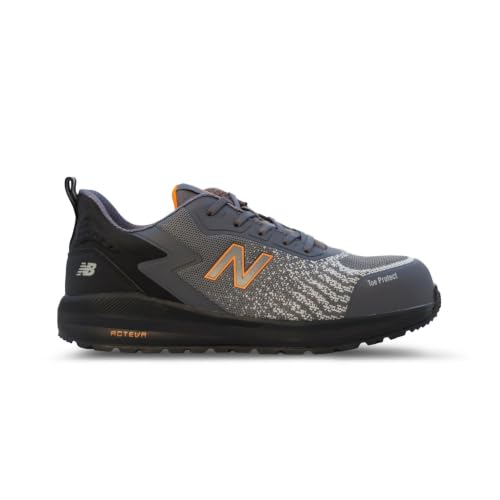
New Balance Speedware Comp Toe
Composite toe · shoe · men's
ICEHSRPR
Carries I · Carries C · Carries PR
Specs: Amazon listing (brand store) — New Balance Speedware, style MIDSPWRGR (2026-11-09)
Xena Workwear Astra Athletic
Composite toe · shoe · women's
ICSDPRSR
Carries I · Carries C · Carries PR
Specs: Xena Workwear product page (2026-11-09)
New Balance Calibre Comp Toe
Composite toe · boot · men's
ICEHSRPR
Carries I · Carries C · Carries PR
Specs: Amazon listing (brand store) — New Balance Calibre, style MIDCLBR (2026-11-09)
Timberland PRO Endurance 6" Steel Toe Puncture Resistant External Met Guard
Steel toe · boot · 6 in · men's
ICMtPR
slip-resistant outsole (maker's claim)
Carries I · Carries C · Carries PR
Specs: Amazon listing (brand store) (2026-11-09)


Specs are makers' published figures, linked on every card. Prices as of 2026-11-13; product prices and availability are subject to change. As an Amazon Associate we earn from qualifying purchases.
Which boots count: the two routes in 1910.136(b)
Paragraph (b)(1) lists the consensus standards that protective footwear must comply with. Any one of them is enough: ASTM F-2412-2005, “Standard Test Methods for Foot Protection”, together with ASTM F-2413-2005, “Standard Specification for Performance Requirements for Protective Footwear”; or ANSI Z41-1999; or ANSI Z41-1991. ASTM's standards replaced the ANSI ones, as OSHA's 2007 letter to the postal workers' union explains.
Paragraph (b)(2) is the route almost every boot on sale today actually uses, because the regulation, whose amendment history ends with a 2014 Federal Register notice, still names the 2005 ASTM editions rather than the 2011, 2018 or 2024 ones.
Is composite toe OSHA approved? OSHA doesn't approve any boot
This is the question behind most searches for OSHA steel toe requirements, usually from someone whose offer letter says “steel toe boots” and who would rather wear something lighter. The short version: OSHA approves no footwear, steel or otherwise. Thorogood, a boot maker, puts it plainly in its ASTM guide: “OSHA does not test, approve, certify, or endorse any product.” OSHA's 2012 letter on footwear for a diabetic worker says the same about makers: “OSHA does not endorse or suggest any particular manufacturers.”
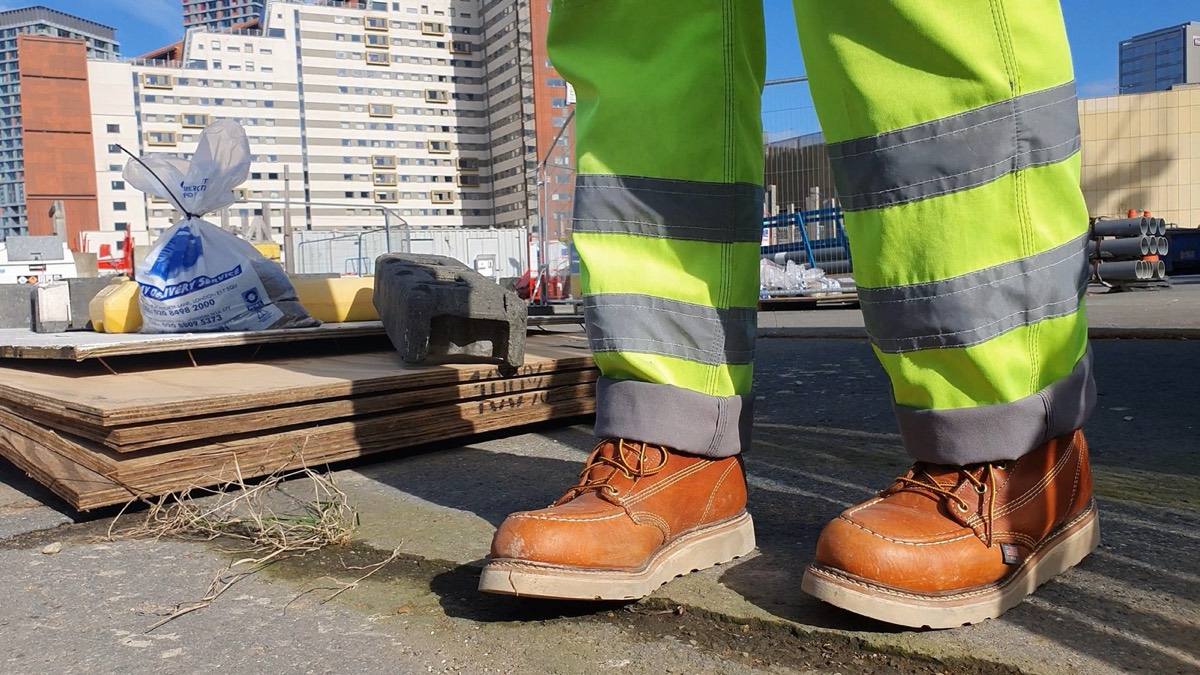
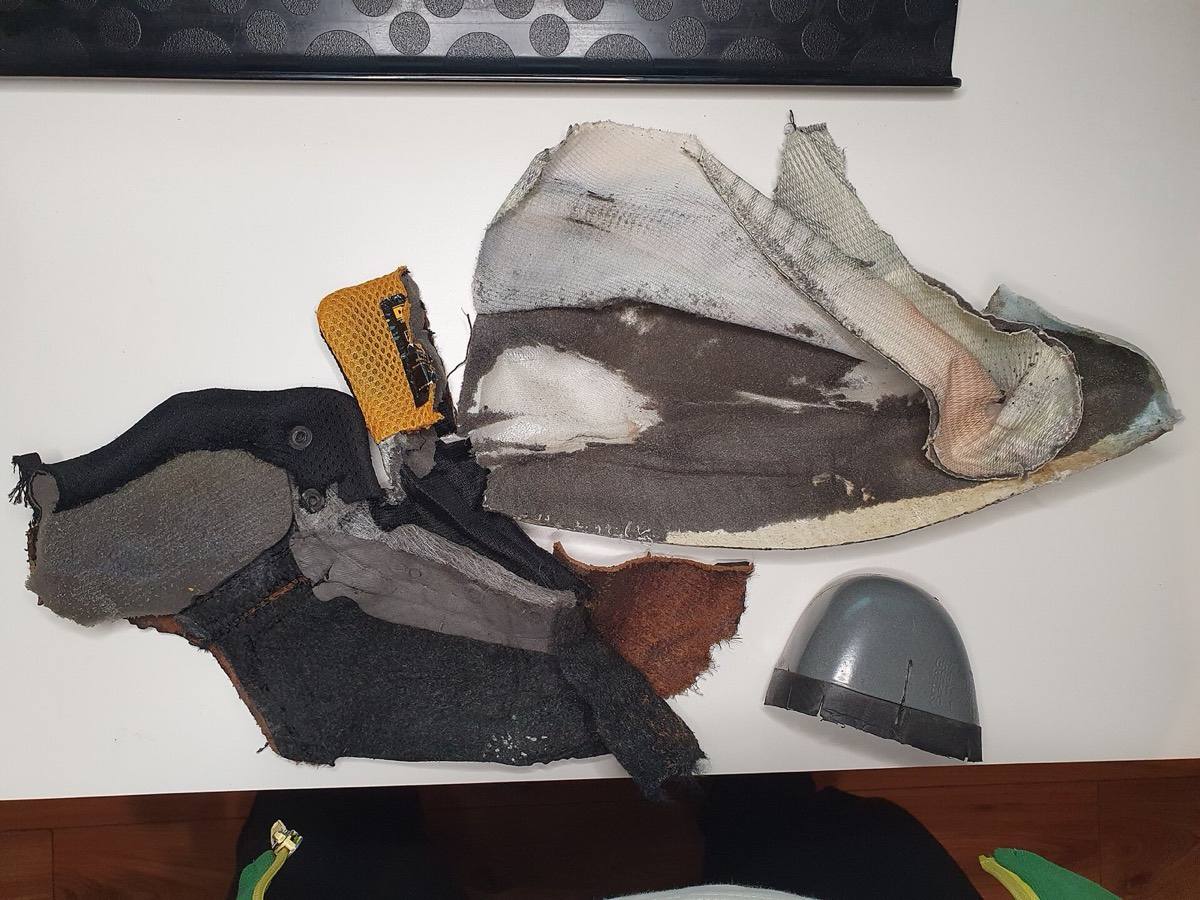
What OSHA cares about is whether the footwear meets the standard. A composite, carbon-fibre, alloy or aluminium cap goes through the same F2413 impact and compression tests as steel, and Thorogood's ASTM testing page states that composite toes meet the same certification as steel. A boot whose label reads, say, “ASTM F2413 M/I/C EH”, like Wolverine's Overpass composite-toe boot, has passed the same toe tests as a steel-toe boot with the same codes.
Your employer can still ask for more than OSHA does. If the written policy says steel specifically, that's a company rule, not a federal one, and the place to ask for an exception is your supervisor or safety lead. Bring the boot's rating line with you.
Who decides you need them: the employer's hazard assessment
Paragraph (a) only switches on “in areas where there is a danger of foot injuries”. Whether your area qualifies is decided by your employer's hazard assessment, which the general PPE rule, 29 CFR 1910.132(d), requires before PPE is selected. The same paragraph says the employer must “Select PPE that properly fits each affected employee.” OSHA's December 2013 letter adds that a blanket “wear safety toes at all times” policy can be justified by that assessment.
OSHA's non-mandatory Appendix B to Subpart I gives the examples employers use to run that assessment. The table maps each hazard to the ASTM code that addresses it, using the wording OSHA and CCOHS publish. The finder at the top of the page uses the same mapping.
| Hazard | Code to look for | What OSHA / CCOHS says |
|---|---|---|
| Heavy items that could drop on toes | I, C | Impact protection for “carrying or handling materials such as packages, objects, parts or heavy tools, which could be dropped” (OSHA App. B) |
| Carts, pallet jacks or rolls that could roll over feet | C | Compression protection for “skid trucks … bulk rolls … heavy pipes” (OSHA App. B) |
| Nails, screws or scrap underfoot | PR | Puncture protection “where sharp objects such as nails, wire, tacks, screws, large staples, scrap metal etc., could be stepped on” (OSHA App. B) |
| Heavy objects striking the top of the foot | Mt | “In some work situations, metatarsal protection should be provided” (OSHA); CCOHS M marking |
| Explosives or volatile chemicals | Cd | Conductive shoes against “fire or explosion from the discharge of static electricity” (OSHA App. B) |
| Live wires or energized circuits | EH | Electrical-hazard footwear when exposed to “hazardous step or touch potential” (OSHA App. B) |
| Static-sensitive electronics | SD | CCOHS: SD footwear where static discharge can harm workers or equipment |
| Wet or oily floors | SR / SRO | Slip codes from ASTM F3445 (SATRA); not in 1910.136 itself |
Construction sites run on a 1967 standard
Construction work falls under 29 CFR Part 1926, not 1910, and its foot rule is a single sentence. Section 1926.96 reads, in full: “Safety-toe footwear for employees shall meet the requirements and specifications in American National Standard for Men's Safety-Toe Footwear, Z41.1-1967.” Its source note dates to a 1993 Federal Register notice.
That's all. The construction rule says nothing about puncture resistance or slip resistance. Thorogood's ASTM guide claims that “OSHA standards also require puncture-resistance and slip-resistance in footwear for construction workers”, but the text of 1926.96 quoted above contains no such requirement. PR can still be a sensible choice on a framing or demolition site, and Appendix B's nail example is the reason. But it comes from the hazard assessment, not from a federal construction mandate.
Construction's PPE rule, 1926.95, did gain fit wording in December 2024: PPE must be “selected to ensure that it properly fits each affected employee” (1926.95(c)(2)). A safety boot that's a size too big, or pinches at the cap, doesn't meet that test.
Jobs OSHA names for routine foot protection
Appendix B lists occupations where foot protection “should be routinely considered”. Being on the list doesn't automatically mean safety toes are required for every task, and not being on it doesn't mean they aren't; it's a prompt for the hazard assessment. The listed roles include shipping and receiving clerks, carpenters, electricians, machinists, plumbers, welders, warehouse laborers, and timber cutting and logging workers.
Electricians are the case people most often get wrong. They're on the list because of dropped tools and materials, and electrical work also brings the EH question. Appendix B describes electrical-hazard footwear as “a supplementary form of protection”, and ASTM F2412-24 frames EH as protection “when accidentally stepping on live electric wires”. It's a backup, not permission to work on energized circuits.
- Shipping and receiving clerks; warehouse laborers: dropped cartons, pallet jacks (I, C).
- Carpenters; plumbers: dropped material, nails and screws underfoot (I, C, often PR).
- Electricians: dropped tools plus electrical exposure (I, C, often EH).
- Machinists; welders: dropped parts and stock, sometimes top-of-foot impact (I, C, sometimes Mt).
- Timber cutting and logging: OSHA's logging rule (1910.266) has its own boot requirements.
Your boot says F2413-18 or -24. Does the old reference matter?
Because 1910.136 still names the 2005 editions, a boot certified to F2413-11, -18 or -24 complies through the “at least as effective” route in (b)(2). OSHA's 2007 letter says “the burden lies on the employer” to show that equivalence. In practice, newer editions of the same ASTM standard are routinely accepted, but no federal OSHA letter we found names F2413-18 or F2413-24.
One state plan has said it in writing. North Carolina's SN 70B (2013) states that NC OSH “will consider safety footwear which is labeled as meeting the requirements of the 2011 ASTM standards as equivalent to the ANSI Z41.1 standards and the ASTM 2005 standards.” If you work in a state that runs its own occupational safety plan, check that plan's rules too; they can differ from the federal text quoted here.
Whatever the edition, what matters for your job is the codes on the label. Our ASTM F2413-18 decoder explains each one with its test value.
Sneakers, slip-ons and medical needs: style isn't the test
Nothing in 1910.136 regulates the shape of the footwear. A low-cut safety shoe, a pull-on wellington or a steel-toe sneaker meets the rule the same way a 6-inch lace-up does: by complying with the referenced standard or being shown at least as effective. Whether a low shoe is right for your job (ankle support, mud, hot slag) is a hazard-assessment question, not a 1910.136 one.
OSHA's 2012 letter on a diabetic worker is the clearest statement that the boot has to suit the wearer too. It notes that some makers market safety-toe shoes for diabetics with “extra wide fitting steel toe caps, and non-metallic toe caps”, and that protection “must not cause the employee harm”. If a standard boot hurts because of a medical condition, that's a conversation for your employer, and possibly your doctor, about a compliant alternative, not a reason to go without.
Questions people ask
- Does OSHA require steel toe boots?
- No. OSHA requires protective footwear where there's a danger of foot injury from falling or rolling objects, objects piercing the sole, or electrical hazards (1910.136(a)). Any toe material that meets the referenced standard, or is shown at least as effective, complies.
- Are composite toe boots OSHA compliant?
- Yes, when they're certified to ASTM F2413. Composite toes go through the same impact and compression tests as steel, and OSHA doesn't approve any boot by material or brand. Check the boot's rating line for I and C plus any other code your job needs.
- Is an alloy, aluminum or carbon toe acceptable to OSHA?
- Yes, on the same basis: what matters is F2413 certification, not the cap material. Irish Setter's aluminum-toe Ashby, for example, lists “ASTM F2413-24, I/C, EH SR”.
- Does OSHA certify or approve safety boots?
- No. OSHA writes the rule; ASTM writes the test standard; makers certify their boots. Thorogood states that OSHA does not test, approve, certify, or endorse any product, and OSHA's own 2012 letter says it doesn't endorse manufacturers. A boot sold as “OSHA approved” really means it meets ASTM F2413.
- Does OSHA require electrical hazard (EH) boots for electricians?
- 1910.136(a) covers electrical hazards that remain after other protective measures, and Appendix B treats EH footwear as supplementary protection. Whether your electrical work needs EH is decided by your employer's hazard assessment.
- Does OSHA require slip-resistant work boots?
- Neither 1910.136 nor 1926.96 mentions slip resistance. Slip resistance is a separate ASTM test (F3445, marked SR or SRO) and, per SATRA, optional unless the maker claims it. Your employer may still require it for wet or oily floors.
- Do warehouse workers need steel toe shoes under OSHA?
- Often, but not automatically. Appendix B lists shipping and receiving clerks and warehouse laborers among the jobs where foot protection should be routinely considered, because of dropped and rolling loads. The employer's hazard assessment decides.
- What are the OSHA rules for construction footwear?
- 29 CFR 1926.96 requires safety-toe footwear to meet ANSI Z41.1-1967. It doesn't mention puncture or slip resistance. Since December 2024, 1926.95(c)(2) also requires PPE that properly fits each employee.
- Does my employer have to pay for my steel toe boots under OSHA?
- Usually not for ordinary safety-toe boots you may wear off the job site: 1910.132(h)(2) exempts non-specialty safety-toe footwear on that condition. Specialty footwear can be different. Our employer-pay guide quotes the full rule.
Sources & further reading
- OSHA 29 CFR 1910.136 Foot protection
- eCFR 29 CFR 1910.136 (current text)
- OSHA 29 CFR 1910.132 General requirements (PPE)
- OSHA 29 CFR 1926.96 Occupational foot protection
- eCFR 29 CFR 1926.95 Criteria for PPE (construction)
- OSHA 1910 Subpart I, Appendix B
- OSHA interpretation letter, 2013-12-09 (Groh)
- OSHA interpretation letter, 2007-08-06 (Thompson)
- OSHA interpretation letter, 2012-06-29 (Douglas)
- NC OSH SN 70B: Revised ASTM standards for foot protection
- Thorogood: A Guide to ASTM Ratings and OSHA Work Boots
- Thorogood: ASTM Testing for Boots
- ASTM F2412-24 abstract
- CCOHS OSH Answers: Safety footwear
- SATRA: Updates to US slip resistance standards (2024)
Read next
- ASTM F2413-18 Decoded
ASTM F2413-18 explained line by line: what I, C, Mt, EH, SD and PR mean, the test values behind each, what changed in F2413-24, and if an -18 boot meets OSHA.
- Composite Toe vs Steel Toe
Composite toe vs steel toe, checked against ASTM F2413: both pass the same 75 ft-lbf impact and 2,500 lbf tests. Where they differ: metal, weight claims, price.
- Construction Boots
Construction boots for new and working tradespeople: which ASTM codes a site calls for, what PR puncture resistance means, mud and ladder features, and 7 picks.
- Electrician Boots
Electrician boots need an EH line on the label, not just a composite toe. What the 18,000 V test covers, EH vs SD vs Cd, lineman boots and six EH-rated picks.
- Best Shoes for Warehouse Work
Best shoes for warehouse work, chosen by label: safety toe for pallet jacks and dropped cartons, SR vs SRO slip codes, shoes vs boots, and six cushioned picks.
Part of Safety Toe Boots. Back to the The Boot Yard home page.

The Boot Yard editors · Editorial team
The Boot Yard's catalogue and guides are compiled by the site's editorial team from makers' published product pages, ASTM F2413 rating lines and OSHA's foot-protection rules. We do not wear-test boots, and we never claim to: every spec on the site links to the page it came from.
About this site · How pages are checked · Last updated November 8, 2026
As an Amazon Associate, The Boot Yard earns from qualifying purchases. It costs you nothing extra and never decides which boots we list.
The Boot Yard is an independent site. It is not affiliated with ASTM International, OSHA or any boot brand. Brand names and trademarks belong to their owners. Our guides explain published standards; your employer's safety program and the boot's own label decide what you must wear.